


Stations
The eight HYROX stations: a practical training guide
Learn the station sequence and give each movement a clear practice objective before combining it with running.
· 4 MIN READ · HIROX EDITORIAL
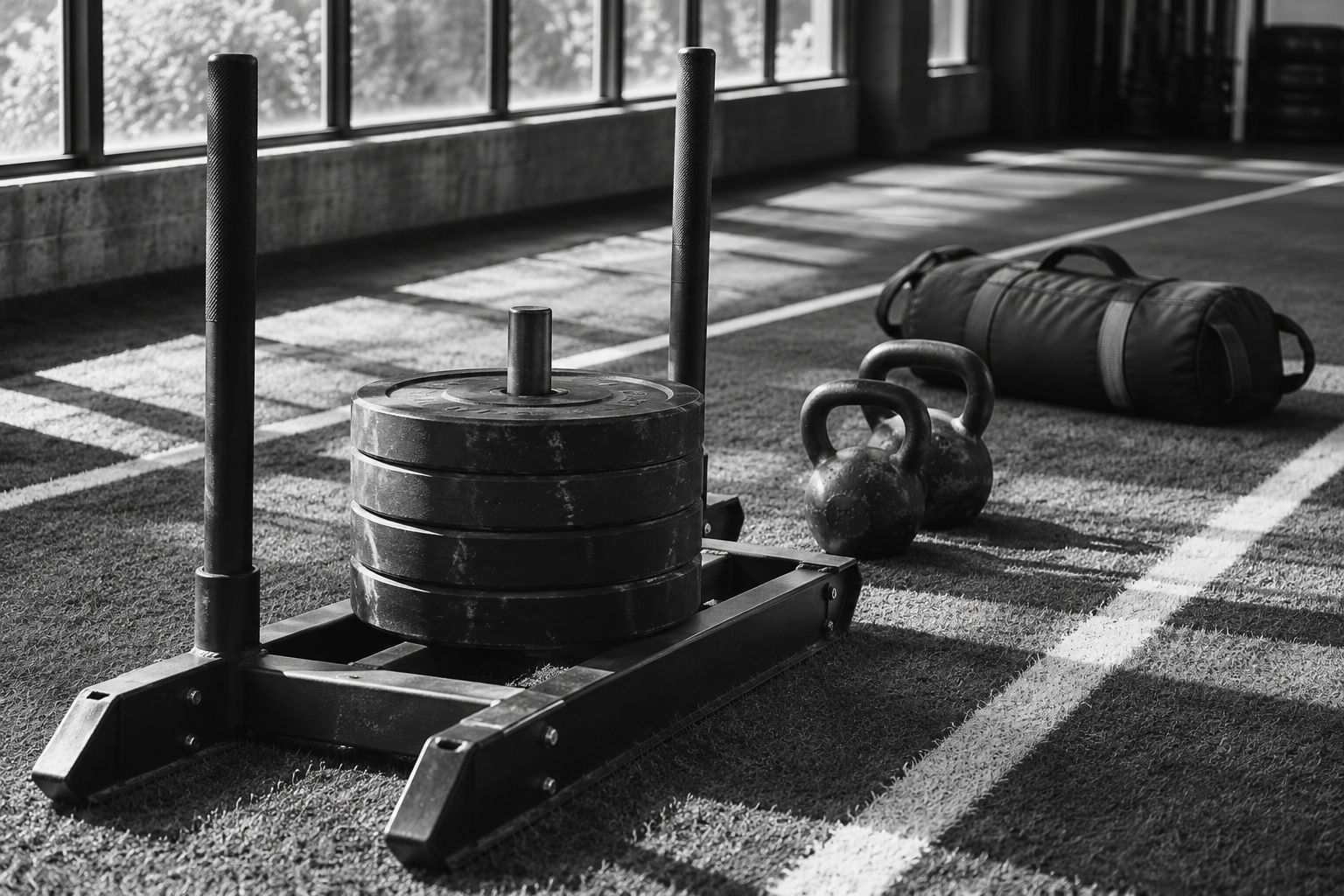
Learn the sequence, then practise the skills
The 2026/27 sequence is SkiErg, sled push, sled pull, burpee broad jumps, rowing, farmers carry, sandbag lunges and wall balls. This guide focuses on training decisions. The linked official rulebooks remain the reference for distances, repetitions, weights and valid movement in your division.
Choose one technical question at a time. Trying to improve all eight stations in a single exhausting session makes feedback difficult. A better introductory visit might focus on machine setup and one loaded movement. Ask a qualified coach to observe unfamiliar exercises and use manageable resistance. Keep notes that describe the equipment and conditions, so future comparisons mean something.
SkiErg and rowing: find a rhythm you can repeat
On the SkiErg, begin by learning the machine rather than chasing the display. Practise a smooth sequence at a comfortable effort and notice whether you are gripping unnecessarily hard or rushing the return. A short controlled interval gives you room to pay attention. Rest, repeat and compare how consistently you can reproduce the movement.
For rowing, take time with the foot straps and seat position before starting. Learn the stroke sequence with coaching if it is unfamiliar. Use a pace you can hold without frantic changes in stroke rate. In both machines, record the settings alongside any performance number. A different setup can change the feel of the task, and an isolated fast interval does not tell you how well you will run afterwards.
Sled push and sled pull: respect the setup
Use supervised practice to find a controlled position and a resistance you can move steadily. For pushing, observe whether your chosen posture allows repeatable steps. For pulling, learn how to manage the rope and maintain a clear working area. Avoid improvising attachment points or using equipment in ways the facility has not approved.
Sled surfaces and equipment differ, so compare sessions cautiously. A load on smooth flooring does not create the same experience as the same plates on another carpet. Record the sled, surface and distance rather than treating plate weight as a complete description. Make the first objective a repeatable effort, then practise returning to an easy jog. That transition can reveal whether you are using more effort than the session intended.
Burpee broad jumps and sandbag lunges: practise control
Begin with separate parts of the burpee and jump if the combined movement is unfamiliar. Use a clear, suitable surface and enough space to land under control. Short sets make it easier to maintain consistent movement. Training modifications can help you learn, but they do not automatically satisfy competition standards; check the current official instructions before rehearsing a race version.
For loaded lunges, start with a load and distance that allow balance and a deliberate rhythm. Practise lifting and positioning the bag with instruction, not just the travelling portion. If each repetition becomes a struggle to regain balance, simplify the exercise. These stations invite an early burst followed by a long slowdown. In practice, compare a patient opening with an aggressive one and observe which lets you finish more consistently.
Farmers carry and wall balls: organise the work
For carries, choose manageable implements and a clear route. Practise picking them up, walking with control and putting them down deliberately. Notice whether grip fatigue changes your posture or makes you rush. A short planned break can be useful in training when it preserves quality; the point is to learn how your effort behaves, not to win every practice set.
Wall-ball practice needs a suitable ball, target and clear space. Learn the movement before accumulating high repetitions. Try small repeatable sets and observe the relationship between breathing, squat rhythm and throw. Ask for feedback on standards rather than assuming every successful catch represents a valid competition repetition. Do not add fatigue until you can perform the basic pattern comfortably and understand what the judge will be looking for.
Connect stations to the next run
Once individual skills are familiar, pair a short station effort with an easy run. Keep the overall session modest enough to identify what happened. If the run immediately becomes ragged, the station effort may have been excessive for that purpose. Repeat with less work or a calmer rhythm and compare the result.
Finish your session with a useful note for each practised station: the setup, the effort that remained controlled and the next technical question. Over time, this creates a personal practice record rather than a collection of unrelated scores. Keep general strength work alongside these skills as appropriate. Race preparation is not complete because you have touched every machine once; it develops as you can perform familiar work consistently and manage the transitions between tasks.
Sources and further reading
HiRox is independent of HYROX. Check the current official rulebook and your event briefing for race requirements.