
HiRoxHiRox
← Training guide

TRAIN WITH A PURPOSE

HYROX Foundational

Build a base that can do the work.

SkillStrengthConsistency
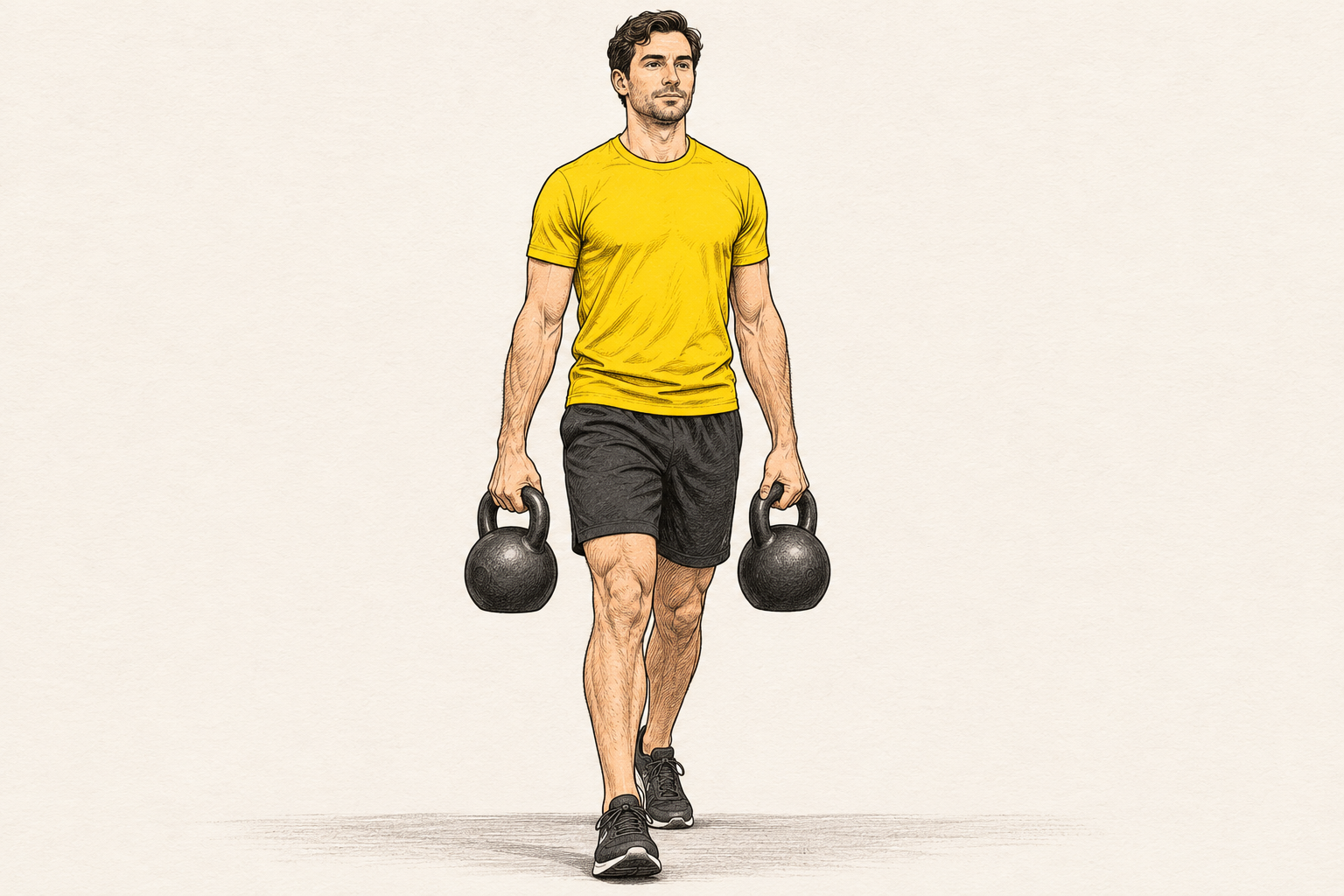
Instructional illustration of an athlete walking upright with one kettlebell in each hand.

PUT THE PURPOSE INTO PRACTICE

Three example workouts.

Source-based workouts. Adapted to your time and equipment.

Session time
Equipment

45-minute examples · Full HYROX gym · Regular routine, familiar stations and comfortable 20–40-minute running. Warm-up and cooldown included.

SAMPLE WORKOUT 01

Build the movement toolkit

Combine a movement primer with repeatable squat, hinge and pushing practice.
45 min · Warm-up and cooldown includedControlled practice · about 5–6 out of 10
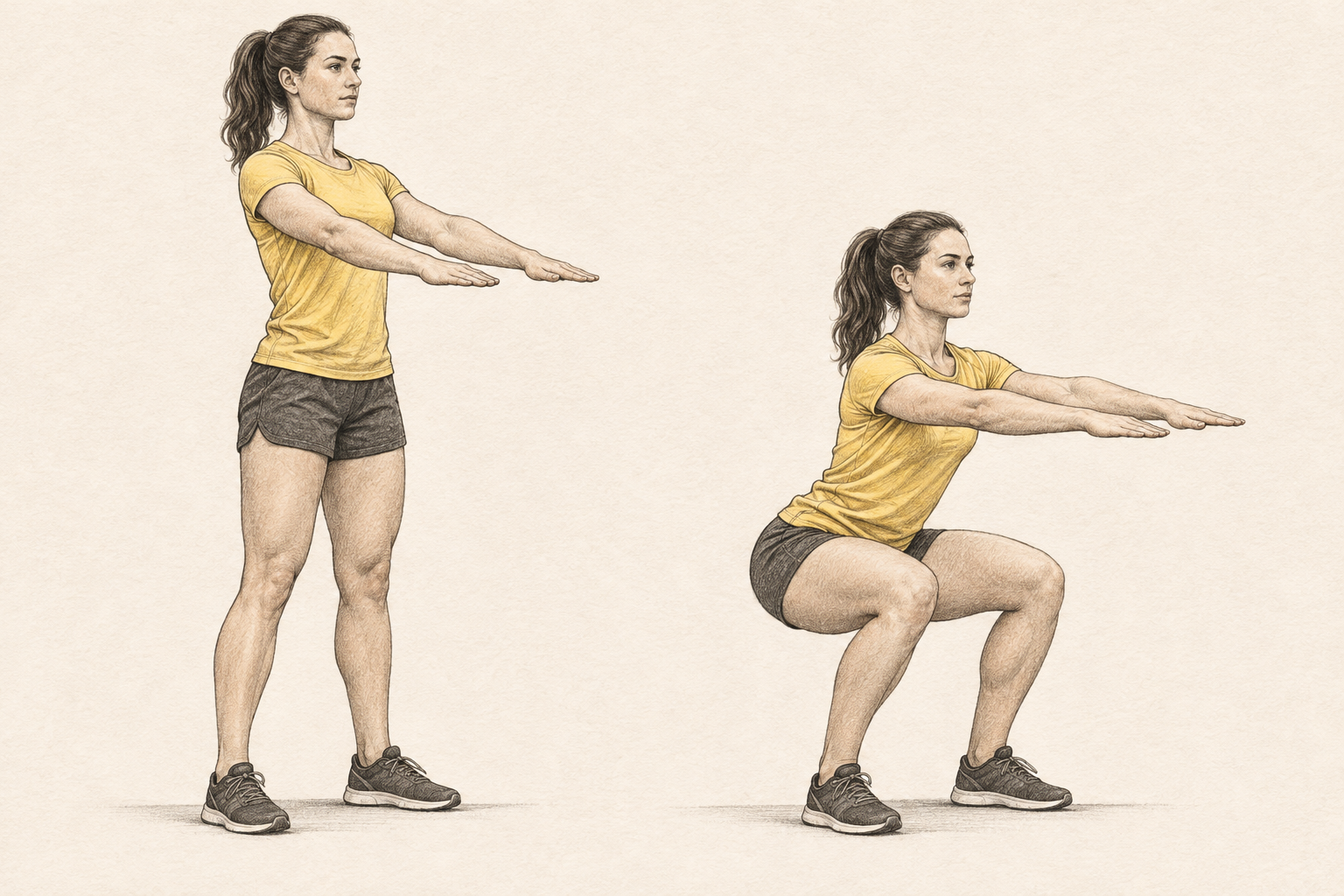
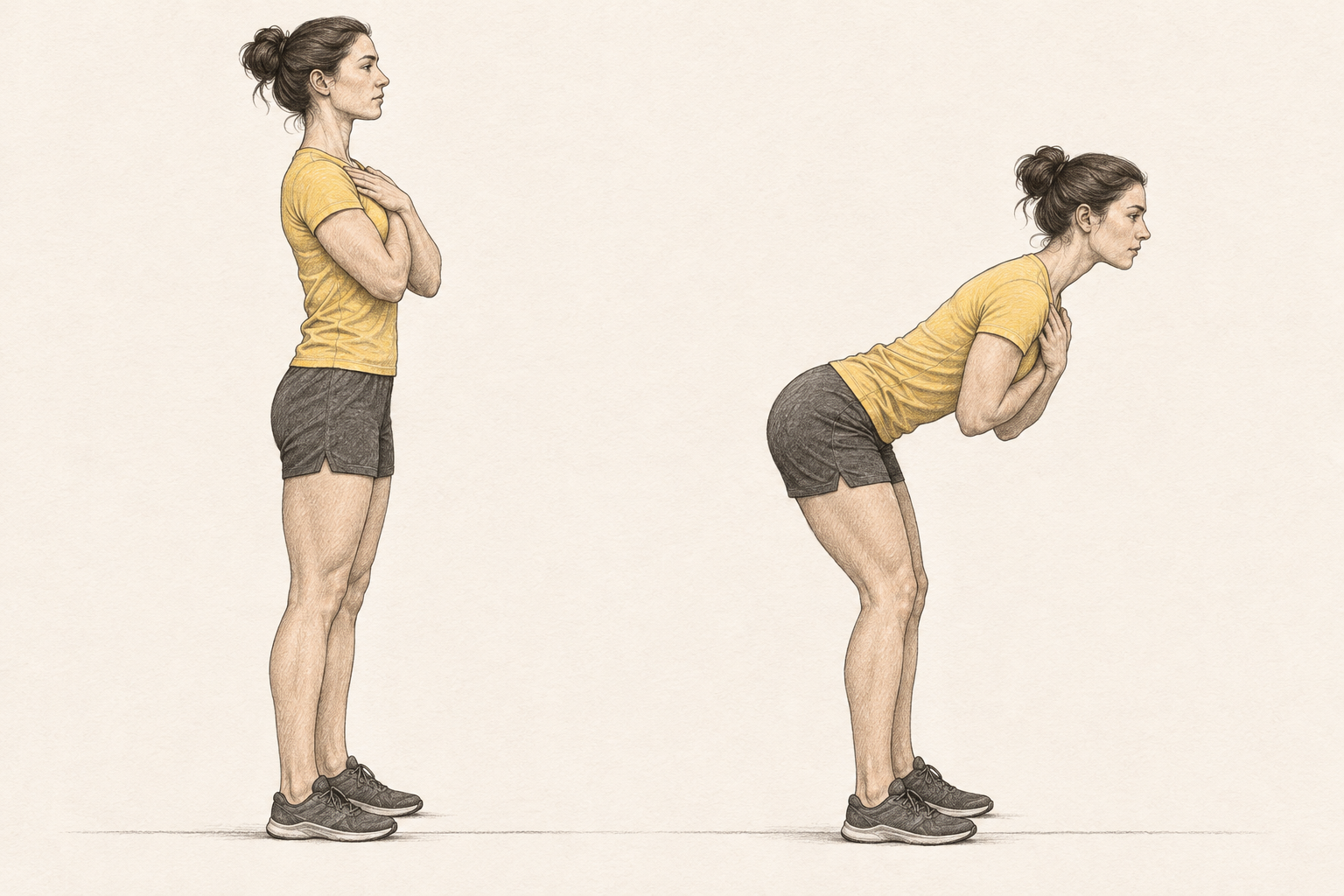
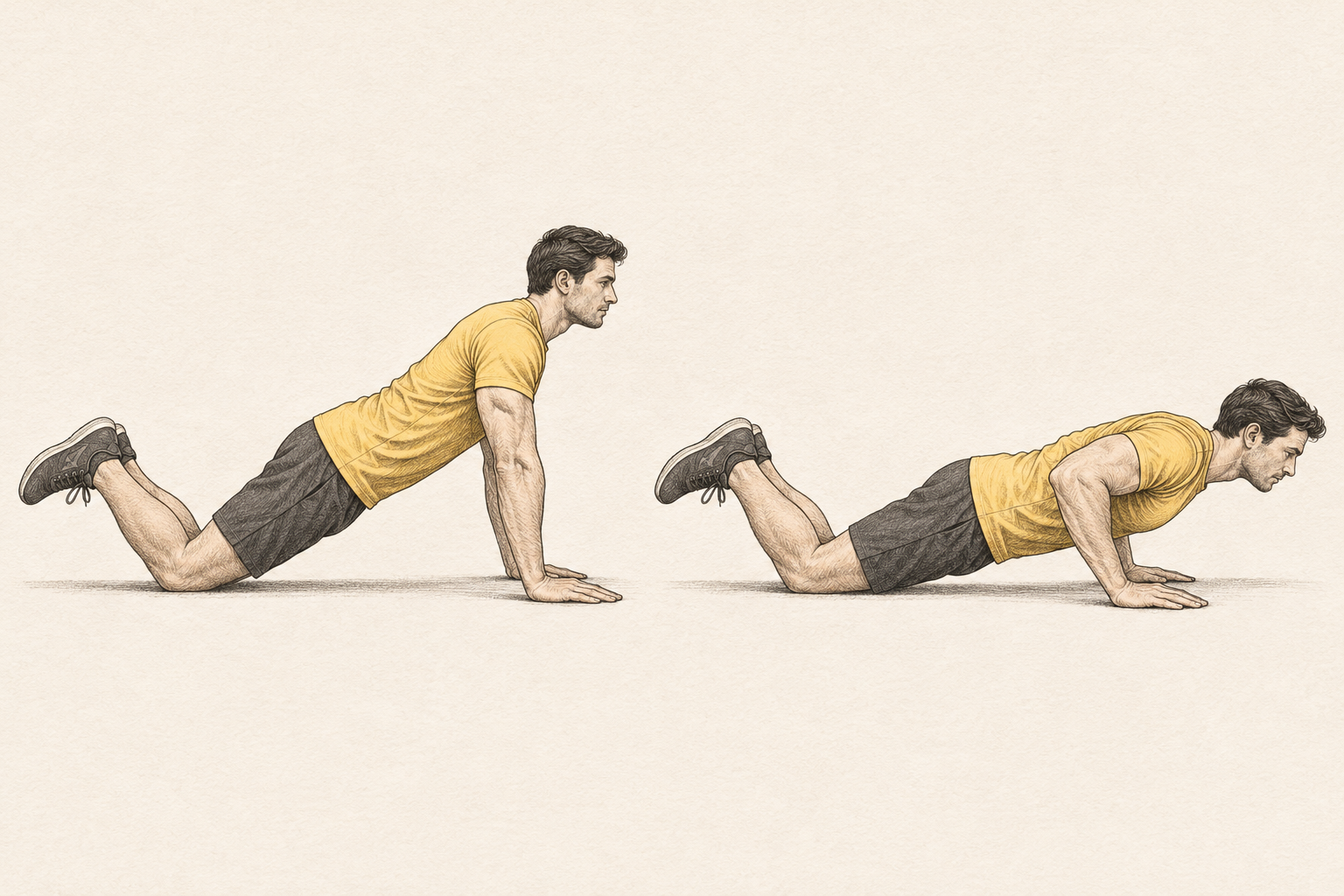
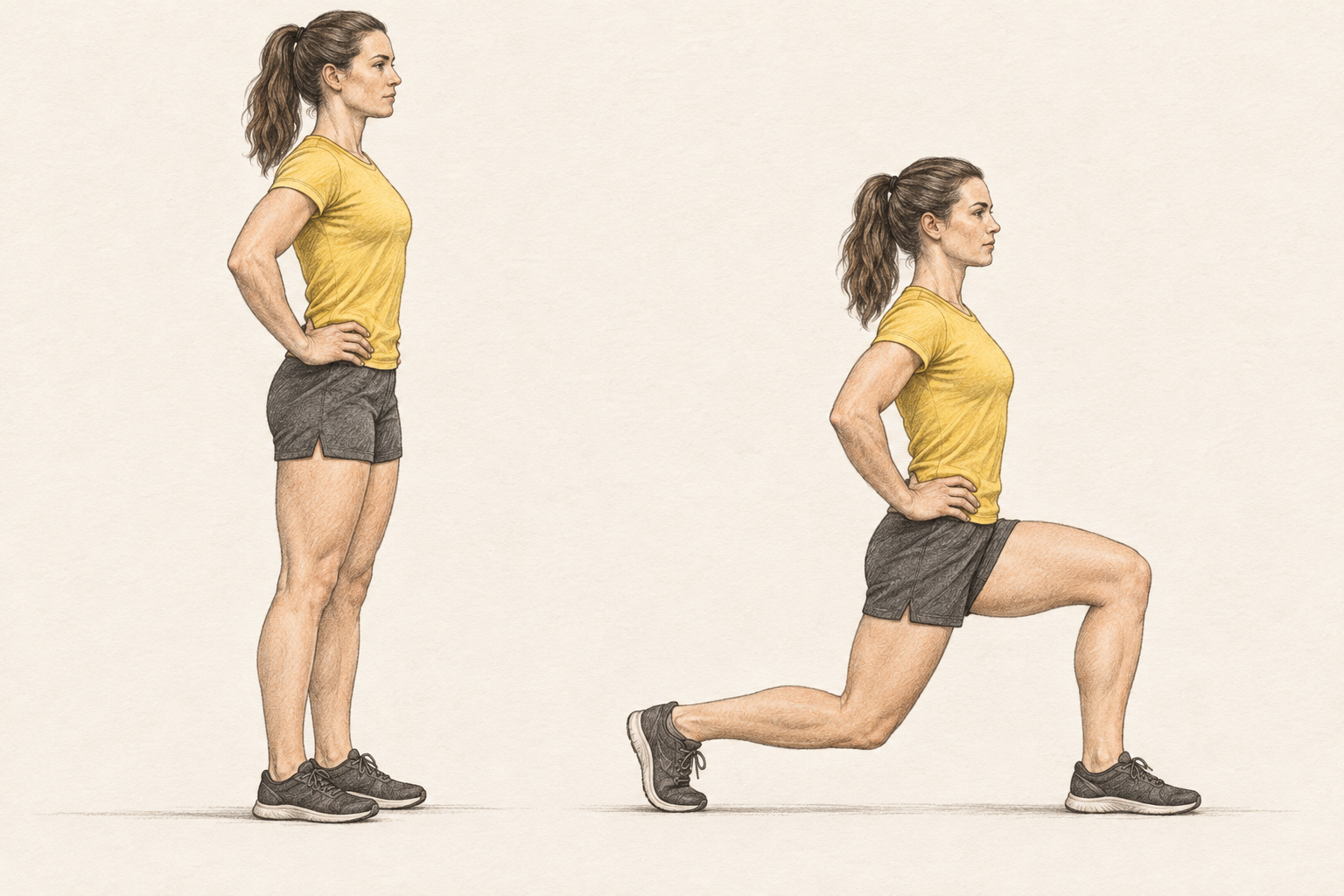
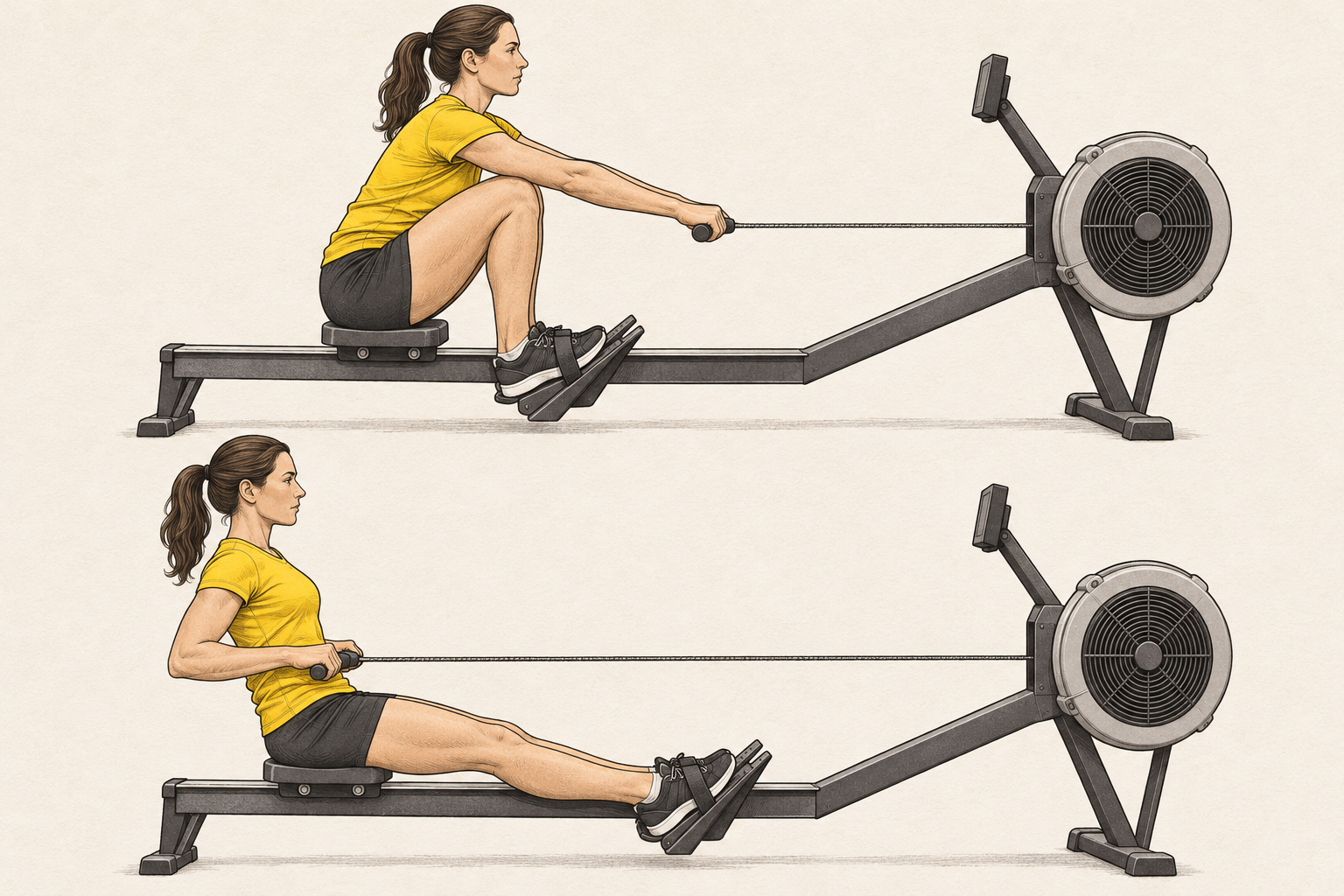
Illustration of rowing technique on a rowing ergometer.Illustration of a controlled bodyweight squat, without external resistance.Illustration of an unloaded hip hinge, without external resistance.Illustration of a press-up from the knees, without external resistance.Illustration of a farmers carry with one weight in each hand.Illustration of an unweighted reverse lunge with a controlled step backward.
Open an image for the full-size view.

Rowing technique primer

5 min

One continuous block

  1. 01
    Easy rowing

    1 block · 5 min work

    Rest: End this block

Recovery / round structureEach round allocates 5 min to work windows/changeovers and 0 min to scheduled recovery. A repetition/distance window is a cap, not a predicted finish time: complete the target or stop at its cap. Use unused window time for setup/recovery; no bonus repetitions or rounds. The final recovery is included.

Squat, hinge and pushing toolkit

15 min

4 rounds · all movements in the order shown

  1. 01
    Bodyweight squat

    4 rounds · 12 reps · 45 sec cap

    Rest: Next movement; changeover inside the cap

  2. 02
    Unloaded hip hinge

    4 rounds · 12 reps · 45 sec cap

    Rest: Next movement; changeover inside the cap

  3. 03
    Kneeling press-up

    4 rounds · 8 reps · 45 sec cap

    Rest: 1 min 15 sec after the round

Recovery / round structure1 min of setup/rehearsal is included once. Each round allocates 2 min 15 sec to work windows/changeovers and 1 min 15 sec to scheduled recovery. A repetition/distance window is a cap, not a predicted finish time: complete the target or stop at its cap. Use unused window time for setup/recovery; no bonus repetitions or rounds. The final recovery is included.

Carry and leg practice

15 min

3 rounds · all movements in the order shown

  1. 01
    Farmers carry

    3 rounds · 1 min 30 sec work

    Rest: Next movement; changeover inside the cap

  2. 02
    Alternating reverse lunge

    3 rounds · 8 reps / side · 1 min 30 sec cap

    Rest: 2 min after the round

Recovery / round structureEach round allocates 3 min to work windows/changeovers and 2 min to scheduled recovery. A repetition/distance window is a cap, not a predicted finish time: complete the target or stop at its cap. Use unused window time for setup/recovery; no bonus repetitions or rounds. The final recovery is included.

Full workout breakdownWarm-up, technique & progression +

Warm-up

5 MIN

Fixed 5-minute progressive preparation

  1. 01
    Easy walking + movement rehearsal
    Sets / rounds
    1 block
    Reps / time
    5 min work
    Rest
    End this block
    Form cue +

    Begin easily, rehearse today's movements and use gradual practice resistance before working sets. Check the route and equipment.

REST / RECOVERY

Each round allocates 5 min to work windows/changeovers and 0 min to scheduled recovery. A repetition/distance window is a cap, not a predicted finish time: complete the target or stop at its cap. Use unused window time for setup/recovery; no bonus repetitions or rounds. The final recovery is included.

Technique & timing +
  • Respect the written movement order, work caps and recovery. Never rush repetitions or sprint to force a target into its window.
  • Timed work ends at the stated dose; reduced-week work can finish before its cap, leaving extra recovery. Repetition/distance work ends at the target or cap, whichever comes first.

Rowing technique primer

5 MIN

One continuous block

  1. 01
    Sets / rounds
    1 block
    Reps / time
    5 min work
    Rest
    End this block
    Form cue +

    Conversational effort, about 3–4 out of 10. This is easy aerobic work, not another test.

    Illustration of rowing technique on a rowing ergometer.
REST / RECOVERY

Each round allocates 5 min to work windows/changeovers and 0 min to scheduled recovery. A repetition/distance window is a cap, not a predicted finish time: complete the target or stop at its cap. Use unused window time for setup/recovery; no bonus repetitions or rounds. The final recovery is included.

Technique & timing +
  • Respect the written movement order, work caps and recovery. Never rush repetitions or sprint to force a target into its window.
  • Timed work ends at the stated dose; reduced-week work can finish before its cap, leaving extra recovery. Repetition/distance work ends at the target or cap, whichever comes first.

Squat, hinge and pushing toolkit

15 MIN

4 rounds · all movements in the order shown

  1. 01
    Bodyweight squat
    Sets / rounds
    4 rounds
    Reps / time
    12 reps · 45 sec cap
    Rest
    Next movement; changeover inside the cap
    Illustration of a controlled bodyweight squat, without external resistance.
  2. 02
    Unloaded hip hinge
    Sets / rounds
    4 rounds
    Reps / time
    12 reps · 45 sec cap
    Rest
    Next movement; changeover inside the cap
    Illustration of an unloaded hip hinge, without external resistance.
  3. 03
    Kneeling press-up
    Sets / rounds
    4 rounds
    Reps / time
    8 reps · 45 sec cap
    Rest
    1 min 15 sec after the round
    Illustration of a press-up from the knees, without external resistance.
REST / RECOVERY

1 min of setup/rehearsal is included once. Each round allocates 2 min 15 sec to work windows/changeovers and 1 min 15 sec to scheduled recovery. A repetition/distance window is a cap, not a predicted finish time: complete the target or stop at its cap. Use unused window time for setup/recovery; no bonus repetitions or rounds. The final recovery is included.

Technique & timing +
  • Respect the written movement order, work caps and recovery. Never rush repetitions or sprint to force a target into its window.
  • Timed work ends at the stated dose; reduced-week work can finish before its cap, leaving extra recovery. Repetition/distance work ends at the target or cap, whichever comes first.

Carry and leg practice

15 MIN

3 rounds · all movements in the order shown

  1. 01
    Farmers carry
    Movement guide ↗
    Sets / rounds
    3 rounds
    Reps / time
    1 min 30 sec work
    Rest
    Next movement; changeover inside the cap
    Form cue +

    Dumbbells or kettlebells. Choose manageable training resistance for stable grip/posture. Reduce it if movement stalls or technique changes; no automatic race loads.

    Illustration of a farmers carry with one weight in each hand.
  2. 02
    Alternating reverse lunge
    Sets / rounds
    3 rounds
    Reps / time
    8 reps / side · 1 min 30 sec cap
    Rest
    2 min after the round
    Form cue +

    Bodyweight, controlled balance and depth; both sides fit within this cap.

    Illustration of an unweighted reverse lunge with a controlled step backward.
REST / RECOVERY

Each round allocates 3 min to work windows/changeovers and 2 min to scheduled recovery. A repetition/distance window is a cap, not a predicted finish time: complete the target or stop at its cap. Use unused window time for setup/recovery; no bonus repetitions or rounds. The final recovery is included.

Technique & timing +
  • Respect the written movement order, work caps and recovery. Never rush repetitions or sprint to force a target into its window.
  • Timed work ends at the stated dose; reduced-week work can finish before its cap, leaving extra recovery. Repetition/distance work ends at the target or cap, whichever comes first.

Cooldown

5 MIN

Fixed 5-minute cooldown

  1. 01
    Easy walking + session review
    Sets / rounds
    1 block
    Reps / time
    5 min work
    Rest
    End this block
    Form cue +

    Let breathing settle; record actual work, effort and recovery. Finish early if needed rather than forcing the clock.

REST / RECOVERY

Each round allocates 5 min to work windows/changeovers and 0 min to scheduled recovery. A repetition/distance window is a cap, not a predicted finish time: complete the target or stop at its cap. Use unused window time for setup/recovery; no bonus repetitions or rounds. The final recovery is included.

Technique & timing +
  • Respect the written movement order, work caps and recovery. Never rush repetitions or sprint to force a target into its window.
  • Timed work ends at the stated dose; reduced-week work can finish before its cap, leaving extra recovery. Repetition/distance work ends at the target or cap, whichever comes first.

Equipment & adaptation

Familiar training equipment and suitable loads/targets; no race load is inferred. Targets are capped; no mandatory finish pace is inferred. Longer appointments add different 15-minute modules; retained work and recovery never change with the duration selector.

Progression

Establish and record this authored working dose. Repeat or simplify the preceding dose if it was not manageable; progression is conditional, never automatic. Stop if discomfort changes movement. The appointment is an upper limit, not forced completion.
SAMPLE WORKOUT 02

Strength patterns, then capacity

Develop substantial squat, hinge and pulling work before adding new training qualities.

45 min · Warm-up and cooldown includedWorking sets · about 6–7 out of 10, with controlled repetitions in reserve
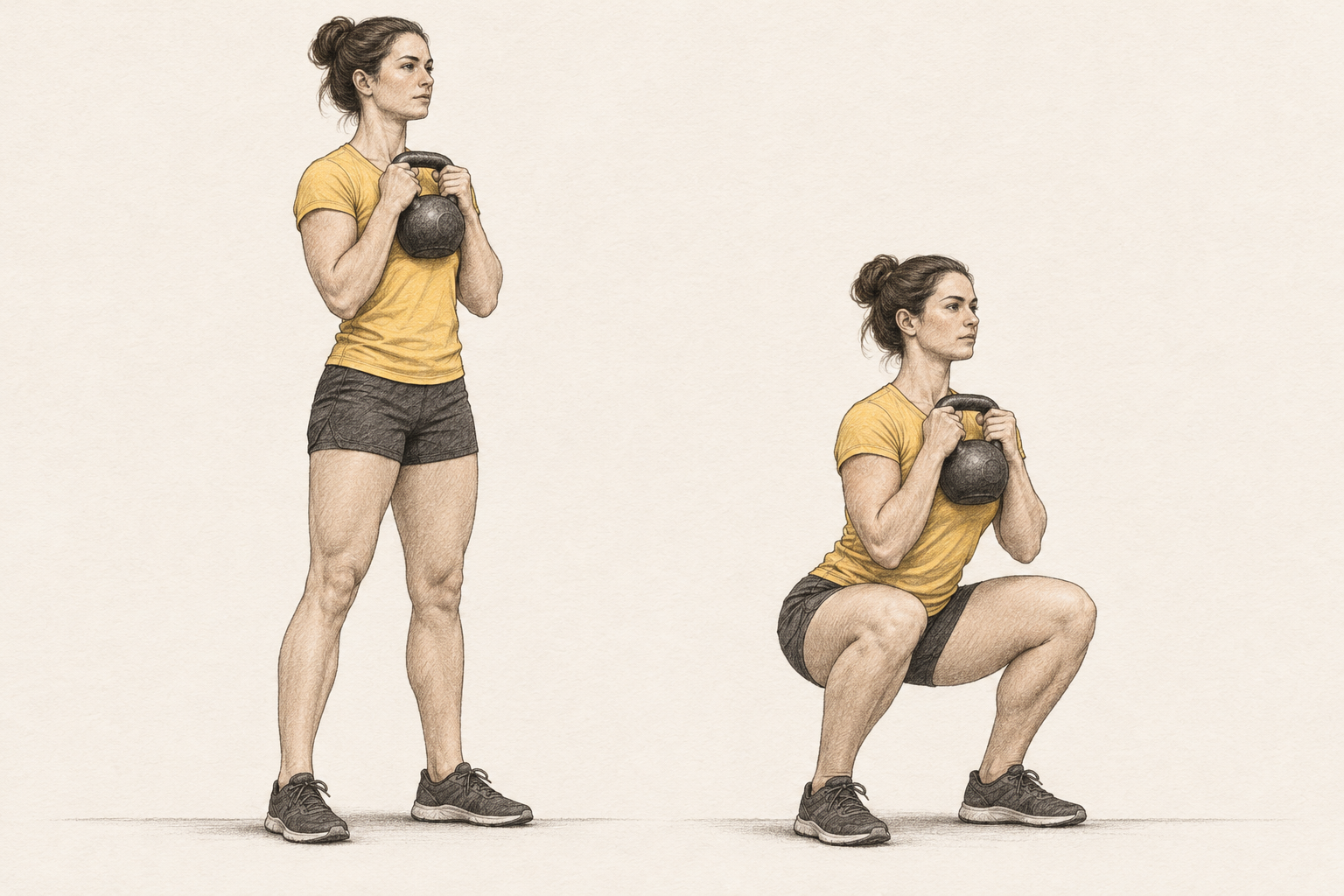
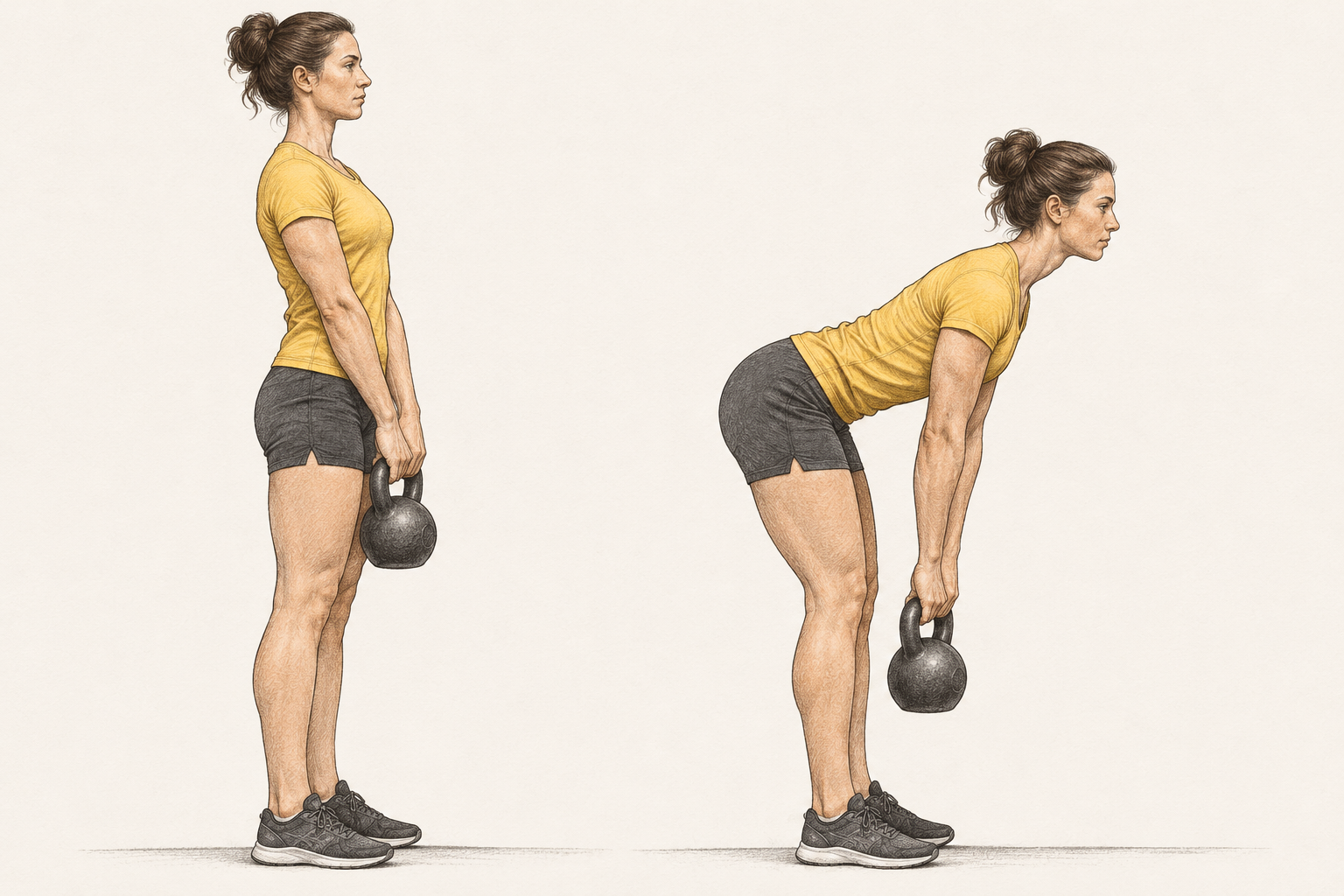
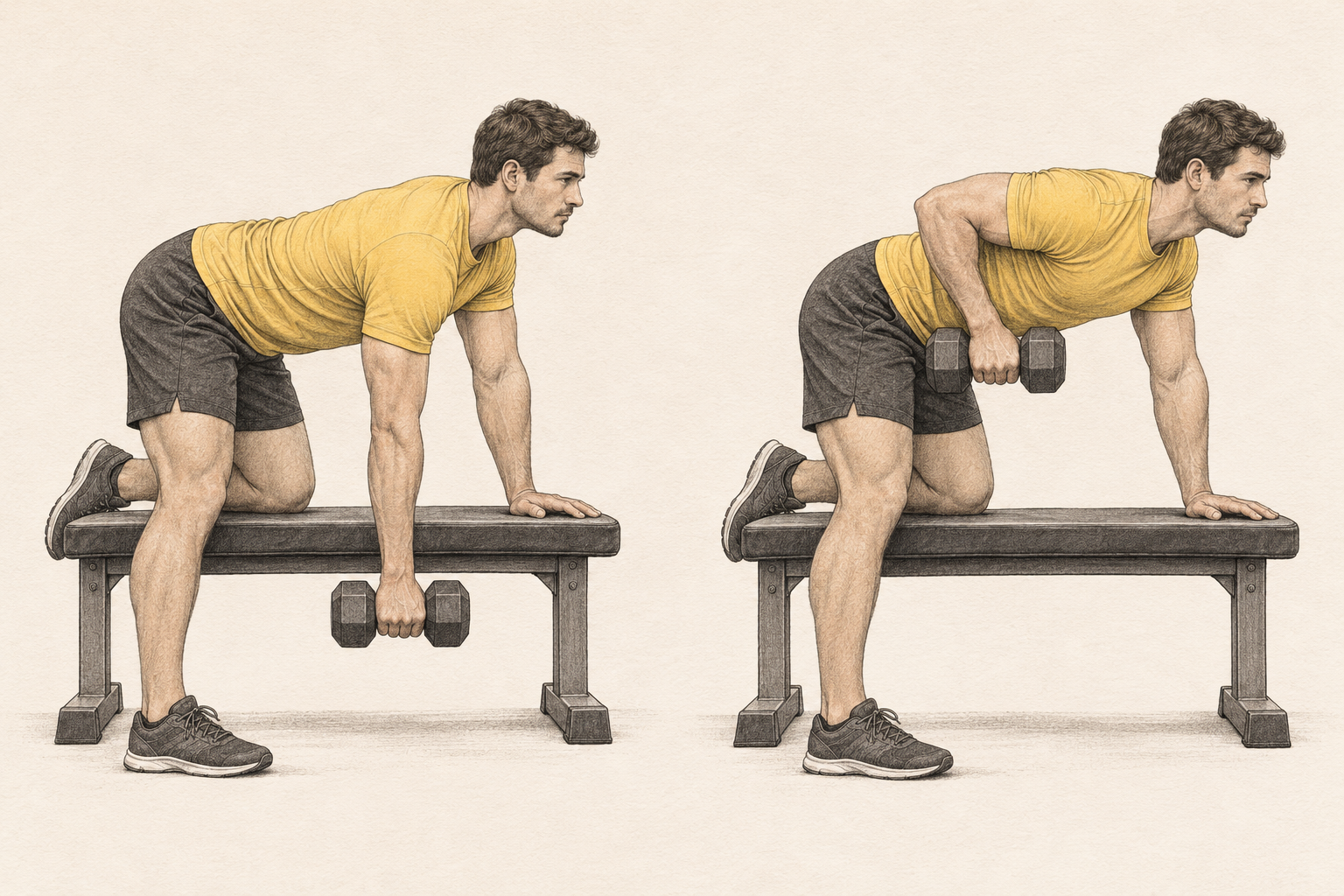
Illustration of a goblet squat holding a weight close to the chest.Illustration of a Romanian deadlift using a weight held securely in both hands.Illustration of a supported one-arm row using a weight and a stable support.Illustration of a farmers carry with one weight in each hand.Illustration of an unweighted reverse lunge with a controlled step backward.
Open an image for the full-size view.

Compound strength circuit

20 min

5 rounds · all movements in the order shown

  1. 01
    Goblet squat

    5 rounds · 8 reps · 45 sec cap

    Rest: Next movement; changeover inside the cap

  2. 02
    Romanian deadlift

    5 rounds · 8 reps · 45 sec cap

    Rest: Next movement; changeover inside the cap

  3. 03
    Supported row

    5 rounds · 8 reps / side · 1 min cap

    Rest: 1 min 30 sec after the round

Recovery / round structureEach round allocates 2 min 30 sec to work windows/changeovers and 1 min 30 sec to scheduled recovery. A repetition/distance window is a cap, not a predicted finish time: complete the target or stop at its cap. Use unused window time for setup/recovery; no bonus repetitions or rounds. The final recovery is included.

Carry and lunge accessory

15 min

3 rounds · all movements in the order shown

  1. 01
    Farmers carry

    3 rounds · 1 min work

    Rest: Next movement; changeover inside the cap

  2. 02
    Alternating reverse lunge

    3 rounds · 10 reps / side · 1 min cap

    Rest: 3 min after the round

Recovery / round structureEach round allocates 2 min to work windows/changeovers and 3 min to scheduled recovery. A repetition/distance window is a cap, not a predicted finish time: complete the target or stop at its cap. Use unused window time for setup/recovery; no bonus repetitions or rounds. The final recovery is included.

Full workout breakdownWarm-up, technique & progression +

Warm-up

5 MIN

Fixed 5-minute progressive preparation

  1. 01
    Easy walking + movement rehearsal
    Sets / rounds
    1 block
    Reps / time
    5 min work
    Rest
    End this block
    Form cue +

    Begin easily, rehearse today's movements and use gradual practice resistance before working sets. Check the route and equipment.

REST / RECOVERY

Each round allocates 5 min to work windows/changeovers and 0 min to scheduled recovery. A repetition/distance window is a cap, not a predicted finish time: complete the target or stop at its cap. Use unused window time for setup/recovery; no bonus repetitions or rounds. The final recovery is included.

Technique & timing +
  • Respect the written movement order, work caps and recovery. Never rush repetitions or sprint to force a target into its window.
  • Timed work ends at the stated dose; reduced-week work can finish before its cap, leaving extra recovery. Repetition/distance work ends at the target or cap, whichever comes first.

Compound strength circuit

20 MIN

5 rounds · all movements in the order shown

  1. 01
    Goblet squat
    Sets / rounds
    5 rounds
    Reps / time
    8 reps · 45 sec cap
    Rest
    Next movement; changeover inside the cap
    Form cue +

    Choose dumbbells or kettlebells for the stated effort, with 2–3 controlled repetitions in reserve. No automatic race loads.

    Illustration of a goblet squat holding a weight close to the chest.
  2. 02
    Romanian deadlift
    Sets / rounds
    5 rounds
    Reps / time
    8 reps · 45 sec cap
    Rest
    Next movement; changeover inside the cap
    Form cue +

    Choose dumbbells or kettlebells for the stated effort, with 2–3 controlled repetitions in reserve. No automatic race loads.

    Illustration of a Romanian deadlift using a weight held securely in both hands.
  3. 03
    Supported row
    Sets / rounds
    5 rounds
    Reps / time
    8 reps / side · 1 min cap
    Rest
    1 min 30 sec after the round
    Form cue +

    Stable supported position. Choose dumbbells or kettlebells for the stated effort, with 2–3 controlled repetitions in reserve. No automatic race loads.

    Illustration of a supported one-arm row using a weight and a stable support.
REST / RECOVERY

Each round allocates 2 min 30 sec to work windows/changeovers and 1 min 30 sec to scheduled recovery. A repetition/distance window is a cap, not a predicted finish time: complete the target or stop at its cap. Use unused window time for setup/recovery; no bonus repetitions or rounds. The final recovery is included.

Technique & timing +
  • Respect the written movement order, work caps and recovery. Never rush repetitions or sprint to force a target into its window.
  • Timed work ends at the stated dose; reduced-week work can finish before its cap, leaving extra recovery. Repetition/distance work ends at the target or cap, whichever comes first.

Carry and lunge accessory

15 MIN

3 rounds · all movements in the order shown

  1. 01
    Farmers carry
    Movement guide ↗
    Sets / rounds
    3 rounds
    Reps / time
    1 min work
    Rest
    Next movement; changeover inside the cap
    Form cue +

    Dumbbells or kettlebells. Choose manageable training resistance for stable grip/posture. Reduce it if movement stalls or technique changes; no automatic race loads.

    Illustration of a farmers carry with one weight in each hand.
  2. 02
    Alternating reverse lunge
    Sets / rounds
    3 rounds
    Reps / time
    10 reps / side · 1 min cap
    Rest
    3 min after the round
    Form cue +

    Bodyweight, controlled balance and depth; both sides fit within this cap.

    Illustration of an unweighted reverse lunge with a controlled step backward.
REST / RECOVERY

Each round allocates 2 min to work windows/changeovers and 3 min to scheduled recovery. A repetition/distance window is a cap, not a predicted finish time: complete the target or stop at its cap. Use unused window time for setup/recovery; no bonus repetitions or rounds. The final recovery is included.

Technique & timing +
  • Respect the written movement order, work caps and recovery. Never rush repetitions or sprint to force a target into its window.
  • Timed work ends at the stated dose; reduced-week work can finish before its cap, leaving extra recovery. Repetition/distance work ends at the target or cap, whichever comes first.

Cooldown

5 MIN

Fixed 5-minute cooldown

  1. 01
    Easy walking + session review
    Sets / rounds
    1 block
    Reps / time
    5 min work
    Rest
    End this block
    Form cue +

    Let breathing settle; record actual work, effort and recovery. Finish early if needed rather than forcing the clock.

REST / RECOVERY

Each round allocates 5 min to work windows/changeovers and 0 min to scheduled recovery. A repetition/distance window is a cap, not a predicted finish time: complete the target or stop at its cap. Use unused window time for setup/recovery; no bonus repetitions or rounds. The final recovery is included.

Technique & timing +
  • Respect the written movement order, work caps and recovery. Never rush repetitions or sprint to force a target into its window.
  • Timed work ends at the stated dose; reduced-week work can finish before its cap, leaving extra recovery. Repetition/distance work ends at the target or cap, whichever comes first.

Equipment & adaptation

Familiar training equipment and suitable loads/targets; no race load is inferred. Targets are capped; no mandatory finish pace is inferred. Longer appointments add different 15-minute modules; retained work and recovery never change with the duration selector.

Progression

Establish and record this authored working dose. Repeat or simplify the preceding dose if it was not manageable; progression is conditional, never automatic. Stop if discomfort changes movement. The appointment is an upper limit, not forced completion.
SAMPLE WORKOUT 03

Capacity across three tasks

Learn to repeat an erg–leg–erg group with an even effort and deliberate transitions.

45 min · Warm-up and cooldown includedRepeatable capacity work · about 6–7 out of 10
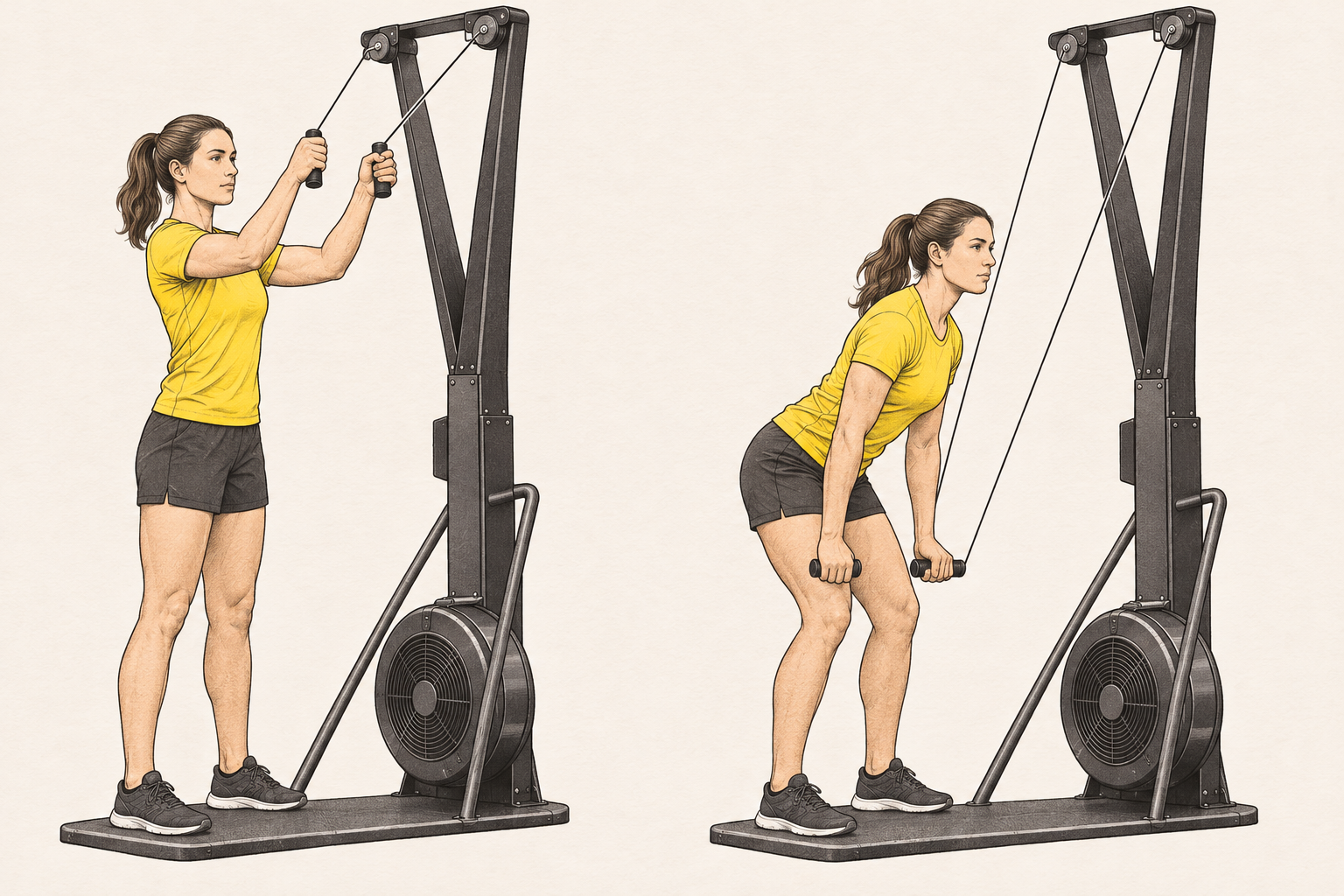
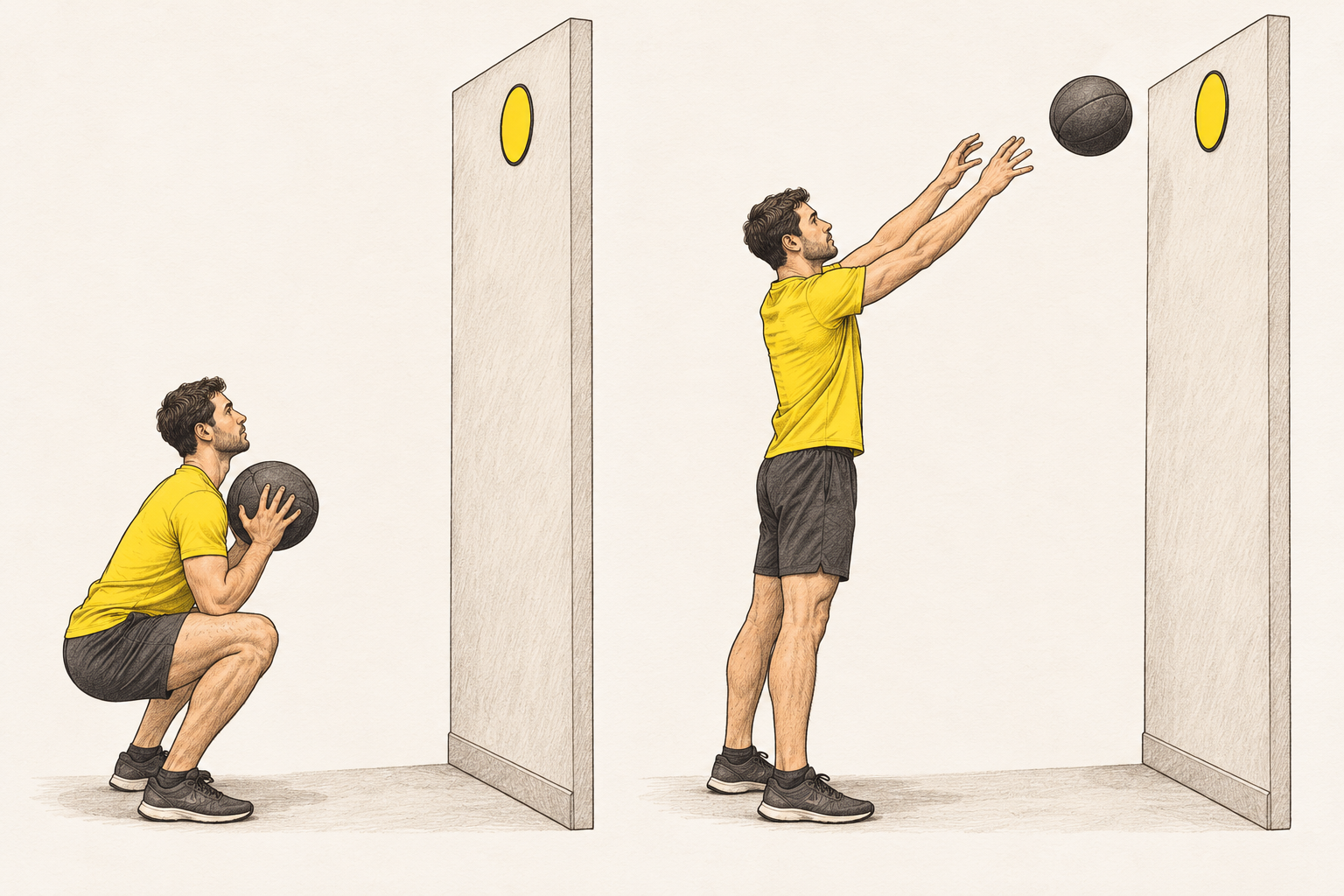
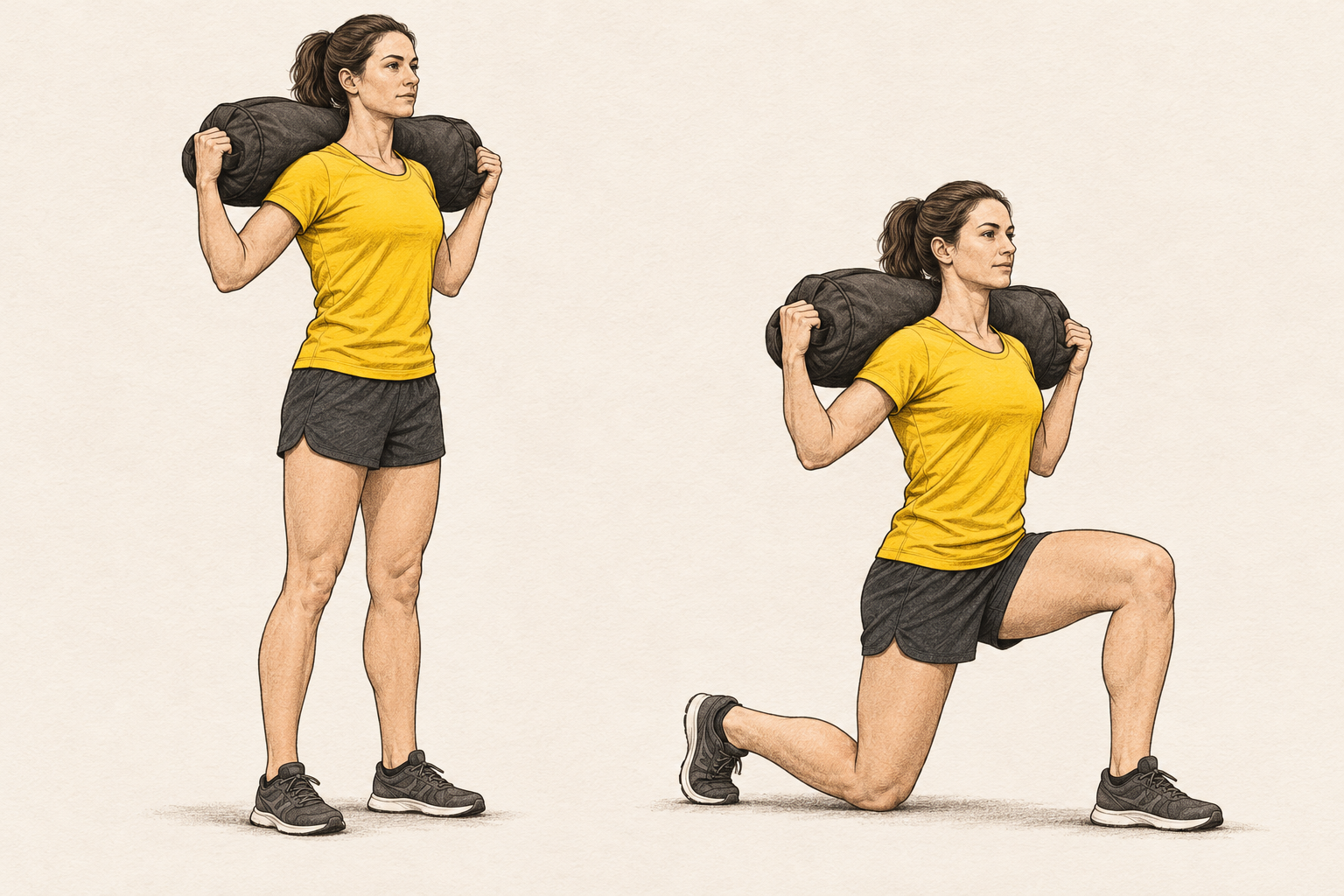
Illustration of rowing technique on a rowing ergometer.Instructional illustration of walking lunges with a sandbag supported across both shoulders.Illustration of controlled pulling on a SkiErg.Illustration of comfortable jogging with relaxed, controlled movement.Illustration of the wall-ball squat and throw.
Open an image for the full-size view.

Three-task capacity group

20 min

4 rounds · all movements in the order shown

  1. 01
    Rowing

    4 rounds · 250 m · 1 min 30 sec cap

    Rest: Next movement; changeover inside the cap

  2. 02
    Sandbag lunge

    4 rounds · 10 m · 1 min cap

    Rest: Next movement; changeover inside the cap

  3. 03
    SkiErg

    4 rounds · 250 m · 1 min 30 sec cap

    Rest: 1 min after the round

Recovery / round structureEach round allocates 4 min to work windows/changeovers and 1 min to scheduled recovery. A repetition/distance window is a cap, not a predicted finish time: complete the target or stop at its cap. Use unused window time for setup/recovery; no bonus repetitions or rounds. The final recovery is included.

Running and wall-ball connection

15 min

3 rounds · all movements in the order shown

  1. 01
    Controlled running

    3 rounds · 400 m · 2 min 30 sec cap

    Rest: Next movement; changeover inside the cap

  2. 02
    Wall ball

    3 rounds · 15 reps · 45 sec cap

    Rest: 1 min 45 sec after the round

Recovery / round structureEach round allocates 3 min 15 sec to work windows/changeovers and 1 min 45 sec to scheduled recovery. A repetition/distance window is a cap, not a predicted finish time: complete the target or stop at its cap. Use unused window time for setup/recovery; no bonus repetitions or rounds. The final recovery is included.

Full workout breakdownWarm-up, technique & progression +

Warm-up

5 MIN

Fixed 5-minute progressive preparation

  1. 01
    Easy walking + movement rehearsal
    Sets / rounds
    1 block
    Reps / time
    5 min work
    Rest
    End this block
    Form cue +

    Begin easily, rehearse today's movements and use gradual practice resistance before working sets. Check the route and equipment.

REST / RECOVERY

Each round allocates 5 min to work windows/changeovers and 0 min to scheduled recovery. A repetition/distance window is a cap, not a predicted finish time: complete the target or stop at its cap. Use unused window time for setup/recovery; no bonus repetitions or rounds. The final recovery is included.

Technique & timing +
  • Respect the written movement order, work caps and recovery. Never rush repetitions or sprint to force a target into its window.
  • Timed work ends at the stated dose; reduced-week work can finish before its cap, leaving extra recovery. Repetition/distance work ends at the target or cap, whichever comes first.

Three-task capacity group

20 MIN

4 rounds · all movements in the order shown

  1. Sets / rounds
    4 rounds
    Reps / time
    250 m · 1 min 30 sec cap
    Rest
    Next movement; changeover inside the cap
    Form cue +

    Repeatable training pace. Stop at the target or cap; no fixed race split is inferred from the quiz.

    Illustration of rowing technique on a rowing ergometer.
  2. 02
    Sandbag lunge
    Movement guide ↗
    Sets / rounds
    4 rounds
    Reps / time
    10 m · 1 min cap
    Rest
    Next movement; changeover inside the cap
    Form cue +

    Use a familiar sandbag with controlled steps. Choose manageable training resistance for stable grip/posture. Reduce it if movement stalls or technique changes; no automatic race loads.

    Instructional illustration of walking lunges with a sandbag supported across both shoulders.
  3. Sets / rounds
    4 rounds
    Reps / time
    250 m · 1 min 30 sec cap
    Rest
    1 min after the round
    Form cue +

    Repeatable training pace. Stop at the target or cap; no fixed race split is inferred from the quiz.

    Illustration of controlled pulling on a SkiErg.
REST / RECOVERY

Each round allocates 4 min to work windows/changeovers and 1 min to scheduled recovery. A repetition/distance window is a cap, not a predicted finish time: complete the target or stop at its cap. Use unused window time for setup/recovery; no bonus repetitions or rounds. The final recovery is included.

Technique & timing +
  • Respect the written movement order, work caps and recovery. Never rush repetitions or sprint to force a target into its window.
  • Timed work ends at the stated dose; reduced-week work can finish before its cap, leaving extra recovery. Repetition/distance work ends at the target or cap, whichever comes first.

Running and wall-ball connection

15 MIN

3 rounds · all movements in the order shown

  1. 01
    Controlled running
    Sets / rounds
    3 rounds
    Reps / time
    400 m · 2 min 30 sec cap
    Rest
    Next movement; changeover inside the cap
    Form cue +

    Controlled effort. Complete the target or stop at the cap; shorten distance rather than sprinting or cutting recovery.

    Illustration of comfortable jogging with relaxed, controlled movement.
  2. Sets / rounds
    3 rounds
    Reps / time
    15 reps · 45 sec cap
    Rest
    1 min 45 sec after the round
    Form cue +

    Suitable training ball and target; keep repetitions clean. Race weight/height are not inferred.

    Illustration of the wall-ball squat and throw.
REST / RECOVERY

Each round allocates 3 min 15 sec to work windows/changeovers and 1 min 45 sec to scheduled recovery. A repetition/distance window is a cap, not a predicted finish time: complete the target or stop at its cap. Use unused window time for setup/recovery; no bonus repetitions or rounds. The final recovery is included.

Technique & timing +
  • Respect the written movement order, work caps and recovery. Never rush repetitions or sprint to force a target into its window.
  • Timed work ends at the stated dose; reduced-week work can finish before its cap, leaving extra recovery. Repetition/distance work ends at the target or cap, whichever comes first.

Cooldown

5 MIN

Fixed 5-minute cooldown

  1. 01
    Easy walking + session review
    Sets / rounds
    1 block
    Reps / time
    5 min work
    Rest
    End this block
    Form cue +

    Let breathing settle; record actual work, effort and recovery. Finish early if needed rather than forcing the clock.

REST / RECOVERY

Each round allocates 5 min to work windows/changeovers and 0 min to scheduled recovery. A repetition/distance window is a cap, not a predicted finish time: complete the target or stop at its cap. Use unused window time for setup/recovery; no bonus repetitions or rounds. The final recovery is included.

Technique & timing +
  • Respect the written movement order, work caps and recovery. Never rush repetitions or sprint to force a target into its window.
  • Timed work ends at the stated dose; reduced-week work can finish before its cap, leaving extra recovery. Repetition/distance work ends at the target or cap, whichever comes first.

Equipment & adaptation

Familiar training equipment and suitable loads/targets; no race load is inferred. Targets are capped; no mandatory finish pace is inferred. Longer appointments add different 15-minute modules; retained work and recovery never change with the duration selector.

Progression

Establish and record this authored working dose. Repeat or simplify the preceding dose if it was not manageable; progression is conditional, never automatic. Stop if discomfort changes movement. The appointment is an upper limit, not forced completion.
Understand Foundational.Read the full guide +

Combine useful strength, aerobic work and station skills in purposeful circuits. Establish a challenging, repeatable workload that you can progress and measure.

A broad base, with a real training stimulus

HYROX365 uses Foundational for broad fitness development. It is a training purpose, not a beginner badge or the separate Academy Foundation Course. A circuit can develop strength endurance, aerobic capacity and movement skill in the same visit, provided its exercises, load and recovery serve a clear aim.

The HiRox samples use the displayed relative effort to make working sets purposeful and repeatable. Choose resistance that demands attention through the final repetitions while preserving movement control. Someone establishing a routine can use easier resistance or simpler tasks. This scaling reflects the person's starting point; the format still develops several qualities together.

Give the main block a clear purpose

Lauren Weeks describes developing strength components alongside easy aerobic work and specific station practice. Her interview names squats, deadlifts and single-leg work, but does not publish their personal sets, loads or recovery. Those movement choices inform our approach; the displayed sets, grouping, effort and recovery are HiRox-authored adaptations.

Read a circuit's group instruction before starting: complete its exercises in order, then take the stated recovery. Sets describe the planned work; a session time limit is a ceiling, not an instruction to keep multiplying rounds. Prepare the equipment during the warm-up so the main block is spent training rather than searching for a free station.

  • Circuit structure: pair a lower-body pattern, a pull and a carry or conditioning task with a bounded number of rounds.
  • Load selection: choose resistance that makes the later repetitions meaningful while the final round still resembles the first.
  • Recovery: preserve the stated rest and use it to prepare the next whole circuit, rather than adding unrelated work.

Scale the challenge without changing what the equipment can do

The 30-minute option includes the core block, preparation and cooldown. At 45 minutes, add a separate 15-minute movement block; at 60 minutes, include a second addition. Shared exercises keep the same sets, repetitions or distance, work windows and recovery across duration choices. Keep the core's prescribed rounds while completing the distinct movements shown in each added block.

Dumbbells support hinges, rows and carries at a basic gym. Unloaded squats, lunges and pushing patterns are useful minimal-equipment work, but they cannot reproduce heavy sled resistance or resisted pulling. Keep that limitation visible and arrange actual station practice when equipment becomes available. Run–walk portions remain appropriate when continuous running is not yet comfortable.

Progress the same work so you can measure it

Repeat a useful session before replacing it. Record the load, rounds completed, effort and recovery. When every prescribed repetition remains controlled, use the plan's next small increase in work or resistance; do not increase load, speed and volume together. Repeating a workout makes that comparison possible.

The Hybrid Engine describes longer training cycles and planned active recovery. Our four-week organisation, equipment choices and duration modules are HiRox adaptations, rather than a champion's personal week. Keep the easy conditioning and recovery days in the plan, and use the reduced-work week to review whether your execution has improved.

Common mistakes

  • Making a circuit so light that its working rounds never become demanding.
  • Adding rounds simply to fill a longer appointment.
  • Changing every exercise before you can compare loads, effort and completed work.
  • Treating bodyweight practice as equivalent to loaded station resistance.

Sources and further reading

Source-based workouts with explicit HiRox adaptations. HiRox is independent of HYROX. Check the current official rulebook and your event briefing for race requirements.

HIROX / TRAINING

Loading your training quiz…

Your answers stay in this page and reset when you reload. The result is an educational sample schedule, not an assessment of race readiness.